
Press

Monochromica Issue 008
YELLOW: the problematic color
“Yellow has always occupied an unstable position in painting. It is the color that arrives first and ages fastest. Medieval altarpieces used gold leaf to signal permanence and divine order, yet the development of yellow pigments tells a far messier story. Orpiment was toxic. Gamboge faded. Chrome yellow darkened. The history of yellow in art is partly a history of artists negotiating with chemistry, and accepting that brilliance often comes with fragility…”
Read more in the link below


Columbia Gorge News | Fall 2026
CCA exhibitions contemplate identity, place, and PNW history
Oregon ArtsWatch | Arts & Culture News
Kristie Strasen: A world not of this world
“Kristie Strasen is a renowned colorist and textile designer, with numerous awards under her belt, and, more importantly, decades of experience in creating pattern and color schemes for high-end textiles where execution matches her original visualization. In the decade or so since she relocated from New York City to the Columbia Gorge, she has infused her creativity, her skill set(s) and her curiosity about the history of her new home into ever more ambitious projects at the loom…”
Read more in the link below
Gorge Magazine | Spring 2020
Kristie Strasen: A love of color informs a long career in textile design
“The course of Kristie Strasen's life changed in an unlikely place for a girl from Puget Sound: the west coast of Ireland. She was there doing research for her master's thesis on folklore, studying the folk-lore traditions of people who live on islands off the coast of bigger islands.
But as she traveled the narrow roads and villages of coastal Ireland, she found herself increasingly captivated by another tradition: the thriving cottage industry of textiles. The wood-on-wood clacking of handlooms became a familiar sound, steaming vats of dye and drying skeins of hand-spun yarn familiar sights. "I would see someone sitting outside on their porch spinning in this hopelessly beautiful setting," Strasen said. "I fell in love." She traveled up the coast of Ireland and on to Scotland, studying textile techniques along the way…”
Read more in the link below
Columbia Gorge News | Fall 2026
Two new exhibits at CCA reconsider the American West
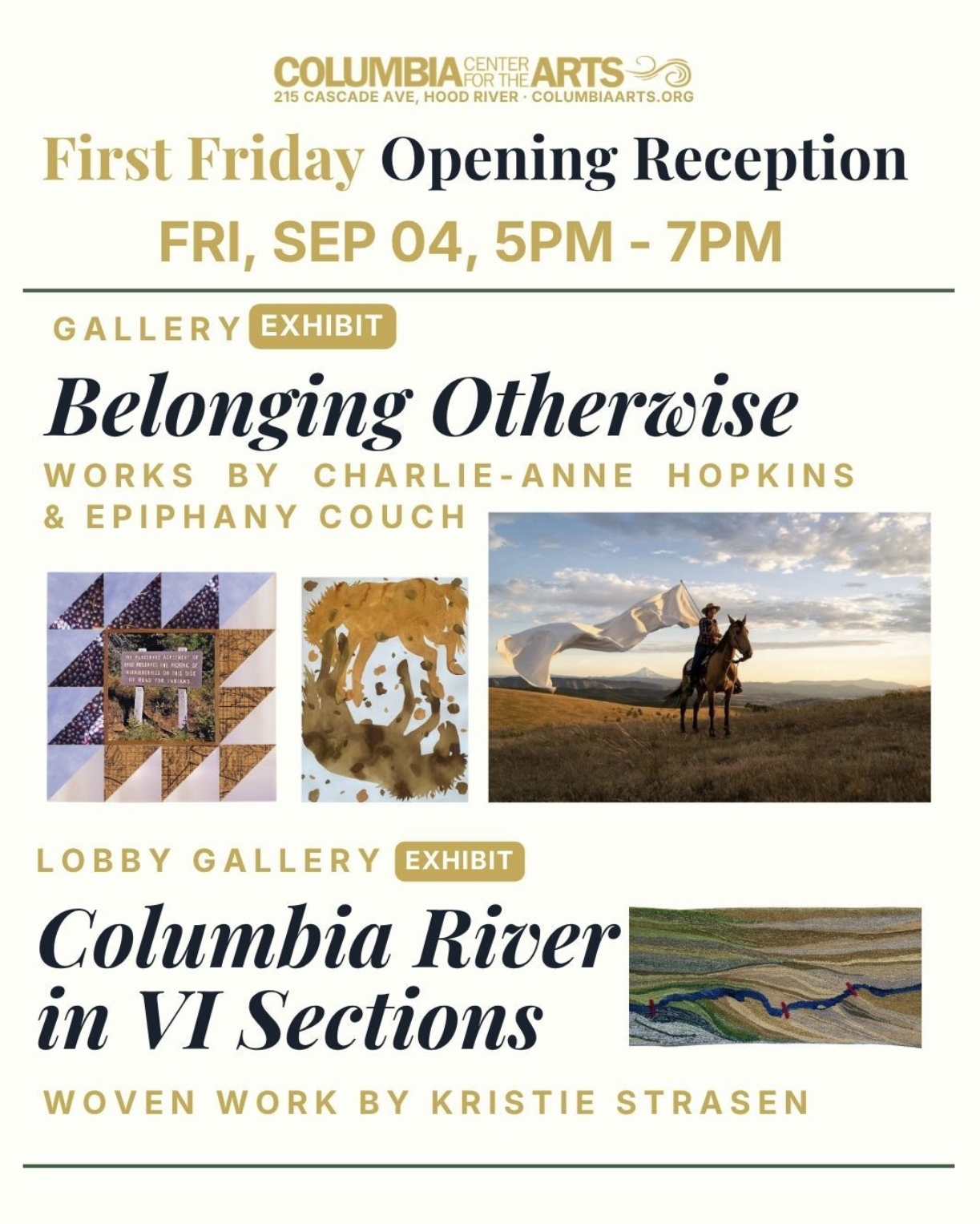
“Two new art exhibitions, each confronting the history, humanity, and meaning of place, debuted at Columbia Center for the Arts (CCA) on Sept. 4 and will run through the end of October.
“Belonging Otherwise,” an immersive gallery featuring various sculpture, photography, and textile works from creative duo Epiphany Couch and Charlie-Anne Hopkins, explores relationships between land and identity, questioning what it means to belong in and connect to the shared spaces we navigate.
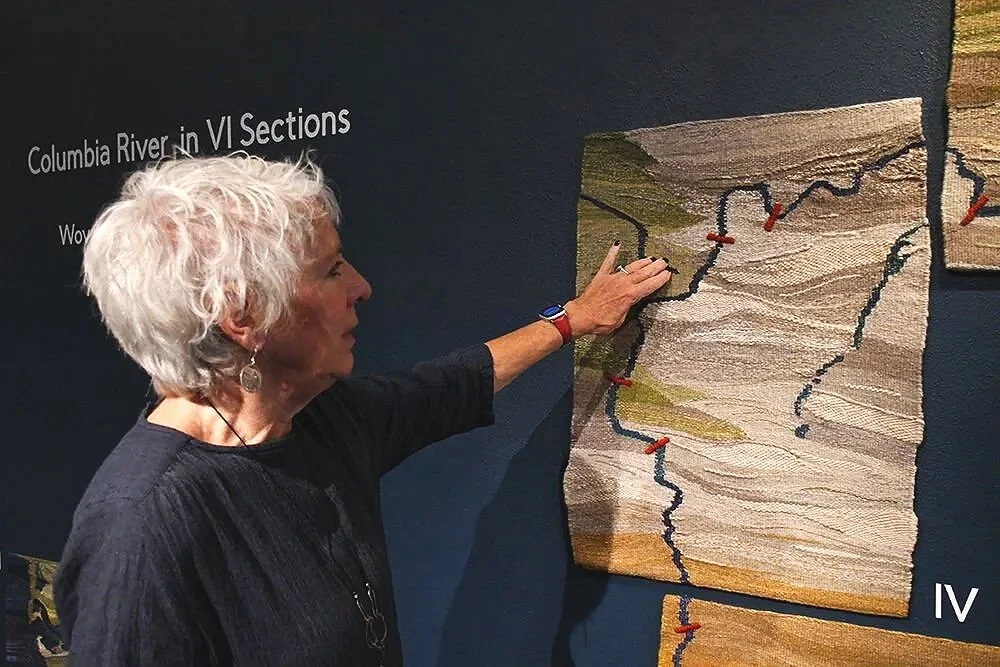
A fragmented tapestry from Kristie Strasen, “Columbia River in VI Sections,” weaves together the winding history of the mighty waterway, acknowledging the devastating impacts of federal dam development on the Native American communities along its path…”
Read more in the link below
“Columbia Center for the Arts will open two exhibitions Friday, Sept. 4, that converge around identity, ecology, and the layered histories of the American West as well as the geological, cultural, and political story of the Columbia River. Both run through Oct. 30 and open with a First Friday reception from 5 to 7 p.m. at the center, located at 215 Cascade Ave.
In the main gallery, “Belonging Otherwise” brings together new work by Epiphany Couch and Charlie-Anne Hopkins, two artists whose distinct practices converge around identity, ecology and the layered histories of the West.
In the lobby gallery, “Columbia River in VI Sections” presents handwoven tapestries by Kristie Strasen that map the river’s full length, from its headwaters in British Columbia to the Pacific, across six woven segments. The 14 dams that interrupt the river’s flow are called out in red. Originally shown at the Gorge Museum, the series traces the geological, cultural and political story of the Columbia and its central role in Native American sovereignty, fishing rights and environmental balance…”
Read more in the link below